Bears Catch Salmon

Santosh Jha
| 08-06-2026
 · Animal Team
Welcome back, Lykkers! Every summer at Brooks Falls in Alaska, one of nature’s most incredible hunting scenes unfolds. Salmon leap through the rushing water, trying to make their way upstream, while brown bears patiently wait for the perfect moment.
With remarkable timing, some bears can catch a fish right out of the air before it lands. It’s a breathtaking display of skill and survival that attracts wildlife lovers and researchers from around the world.
The famous gathering is not simply about hungry bears chasing fish. It is a carefully timed event shaped by thousands of years of evolution, seasonal migration, and learned behavior. Every movement, from where a bear chooses to stand to the exact moment it snaps its head forward, reflects remarkable adaptation.
Why Brooks Falls Becomes a Bear Hotspot
Brooks Falls lies within Katmai National Park and Preserve, an area renowned for its large population of coastal brown bears (Ursus arctos). Unlike many inland grizzlies that depend heavily on berries, roots, or small mammals, these bears have access to one of the richest natural food sources on Earth: Pacific salmon.
Each summer, thousands of sockeye salmon leave the ocean and swim upstream through the Brooks River to reach their spawning grounds. To continue their journey, they must leap over the waterfall. This creates a natural bottleneck where fish are briefly suspended in the air, making them vulnerable to skilled predators.
For the bears, timing could not be more important. During late June and July, they begin consuming enormous amounts of food to prepare for the long winter denning season. A single sockeye salmon can provide roughly 4,500 calories, offering a highly efficient source of energy compared with foraging for plants or chasing smaller prey.
Large males may exceed 1,000 pounds by autumn, carrying substantial energy reserves that will sustain them through months without eating. Their success during salmon season directly influences their ability to survive the winter.

The Science Behind Their Remarkable Fishing Skills
At first glance, catching fish from a waterfall might appear to rely purely on luck. In reality, it demands patience, coordination, and experience.
One of the most effective methods observed at Brooks Falls is known as the "stand-and-wait" strategy. Rather than charging through the river, a bear positions itself at the crest or base of the falls where salmon jump most frequently. It remains almost perfectly still, watching the water with intense concentration.
The moment a fish breaks the surface, the bear reacts with astonishing speed. Some swipe with a powerful forepaw, while others simply open their jaws and intercept the salmon in midair. Experienced individuals often succeed in a fraction of a second.
Researchers have noticed that not every bear hunts with equal efficiency. Some become specialists, repeatedly catching fish without wasting energy. Others may miss several attempts before securing a meal. These differences suggest that successful fishing is not entirely instinctive but improves through observation and practice.
Fishing Spots Are Valuable Real Estate
The most productive positions around Brooks Falls are highly sought after. Dominant bears, usually large males, often claim the best locations where salmon are most likely to leap.
These prime spots can dramatically increase the number of fish caught in a single day. Instead of constant fighting, bears generally establish a social hierarchy. Smaller individuals often avoid direct conflict and wait for opportunities at less favorable locations.
Younger bears may cautiously approach when space opens up, but they must remain alert to avoid provoking larger neighbors. This arrangement helps reduce unnecessary energy loss and the risk of injury. A wounded bear entering winter with insufficient energy reserves faces a much greater survival challenge than one that has conserved its strength.
A Skill Passed Through Generations
Scientists believe that fishing behavior among coastal brown bears involves more than simple instinct. Cubs spend their first years closely following their mothers, watching how they move through the river and where they position themselves. Young bears gradually imitate these techniques, learning which currents carry salmon and how to judge the timing of a leap.
This process resembles a form of cultural transmission, where knowledge is shared across generations rather than being entirely hardwired at birth. Bears raised in regions without major salmon runs often develop completely different feeding habits, relying instead on vegetation, insects, or land mammals. Their environment shapes the strategies they use to survive.
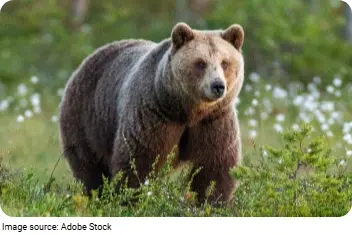
The dramatic images of bears snatching salmon from the air have made Brooks Falls world-famous, but the event represents something much larger. It is a vivid example of how wildlife adapts to seasonal opportunities and how entire ecosystems are connected.